In our work with entrepreneurs, we've found that one of the most challenging things about hiring an editor for your book is knowing exactly what you’re signing up for – especially if you’re a first time author.
While you can ask about an editor’s experience, the type of editing they do and their prices and turnaround times, it’s still hard to know what you’re getting based on a description and a price alone. Plus, many editors use different terminology to describe their work and have different understandings about what’s expected of them, which means you’re often not comparing apples with apples.
So what does 'editing' actually mean?
There are a number of levels of editing services, which include:
At Grammar Factory, we fall into the third category.
Because we only work with entrepreneurs, we know you’re probably not a professional writer. You have a lot on your plate and want to streamline the writing and publishing process as much as possible. We know that vague advice about moving content around, cutting things out, or adding more detail isn’t very helpful. So, if your structure needs work or repetition needs cutting, we will do it for you. If you need to add new content, we will break down our recommendations into bullet points and questions to ensure you know exactly what you need to do to take your book to the next level.
What does this look like?
As mentioned earlier, it’s hard to know exactly what you’re getting based on a description and a price, so we always recommend requesting a sample of an editor’s work to see exactly what they do.
This is helpful for a few reasons:
So that you can get a sense for the type of work we do, we’ve included some samples of our edits below.
The sample edit vault
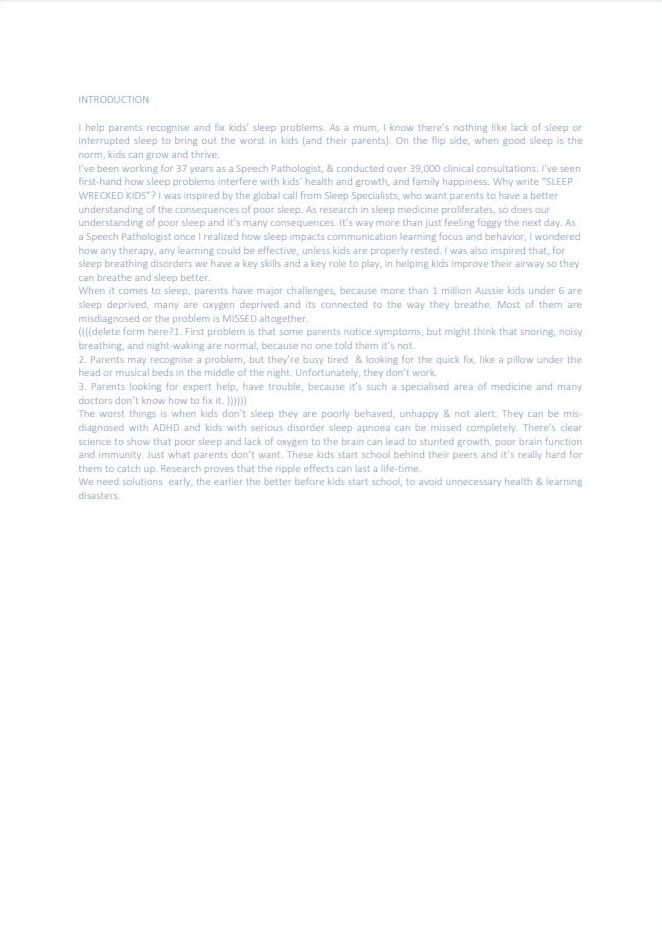
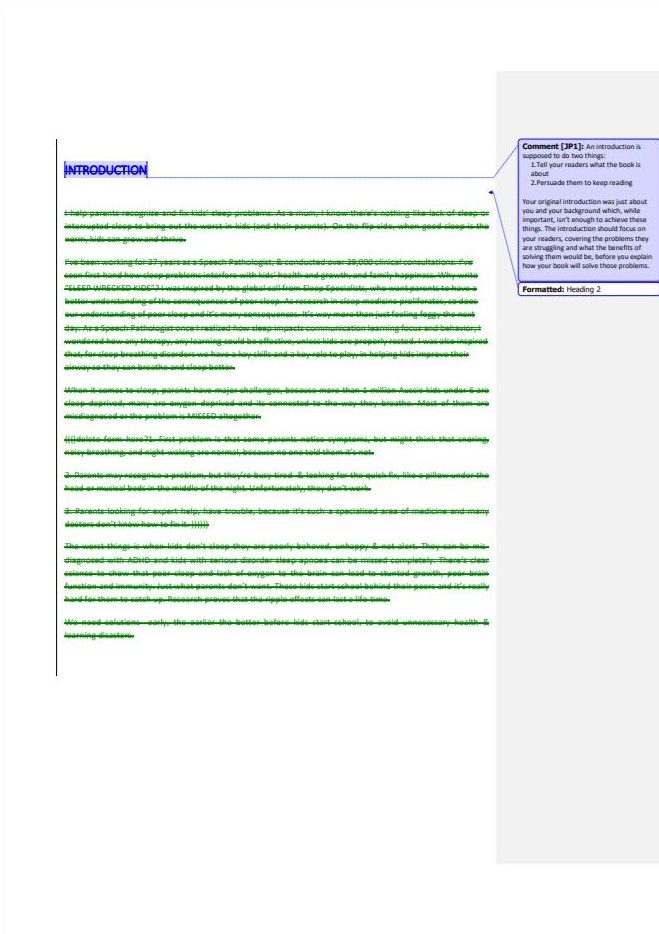
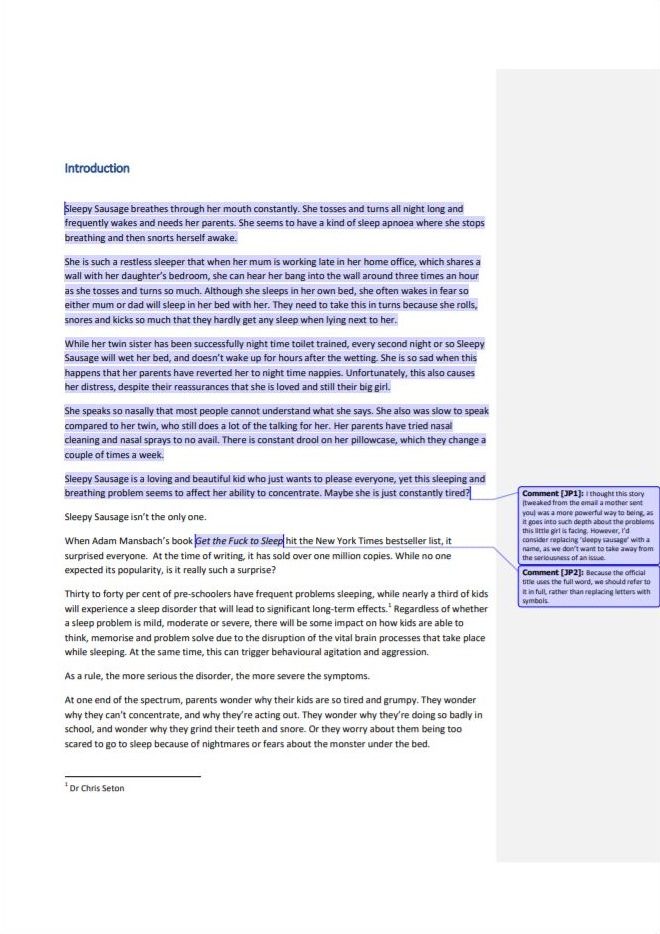
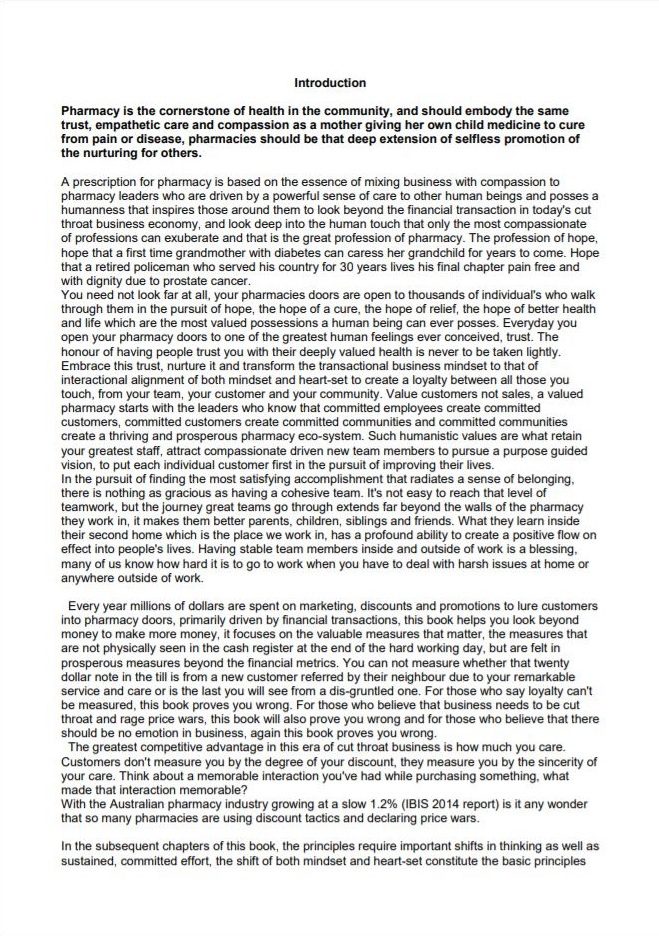
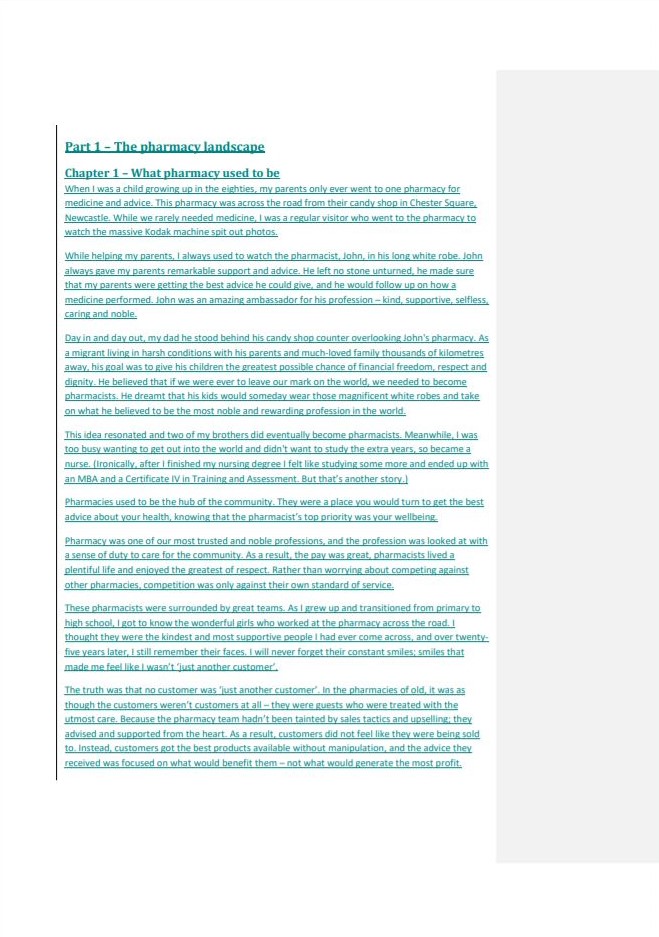
Below you’ll find five chapters submitted by real clients – one about values, one on financial planning, one on home automation, an introduction chapter about pharmacies, and one about children's sleep disorders.
There are variations of each chapter included:
- 1The original content the client submitted, so you can see where we started.
- 2Their edited chapter with the changes tracked. In this version you can see all of the deletions, additions and comments we made when editing the document. Be warned – this version can get quite messy, which makes reading difficult. Because of this, we recommend reading the ‘final’ version with changes accepted to get a sense for how the edited chapter flows.
- 3Their edited chapter with all of our changes accepted. Here you will still see the comments we made, but all of the marked-up changes within the text have disappeared so you can read the edited version more easily.
The sample edits
Values chapter sample edits


Financial planning sample edits


Home automation sample edits


Pharmacies introduction sample edits
Sleep disorders sample edits